Free Printable Dichotomous Key Worksheet – A dichotomous key is a simple identification tool used in biology and science classes. It helps students identify plants, animals, insects, or other organisms by answering a series of paired yes/no questions or statements about observable traits. Each step offers two choices, narrowing options until the organism is named.
Teachers and parents often look for a free printable dichotomous key worksheet to give students hands-on practice with classification skills. These worksheets support middle and high school science standards focused on taxonomy, observation, and scientific reasoning. They are useful for classroom lessons, homework, review, or homeschool activities across the United States.
This guide explains how dichotomous keys work and points to legitimate free printable resources from trusted educator sites.
What Is a Dichotomous Key?
A dichotomous key uses binary choices to classify living things. “Dichotomous” means divided into two parts. Students start at the beginning and follow the path that matches the organism’s features, such as leaf shape, number of legs, presence of wings, or body covering.
Common uses include identifying tree leaves, insects, fish, or classroom objects. Practice builds observation skills and an understanding of how scientists organize biodiversity. Worksheets typically include a sample key, organisms to identify, space to record steps, and sometimes prompts for students to create their own key.
Free Printable Dichotomous Key Worksheet
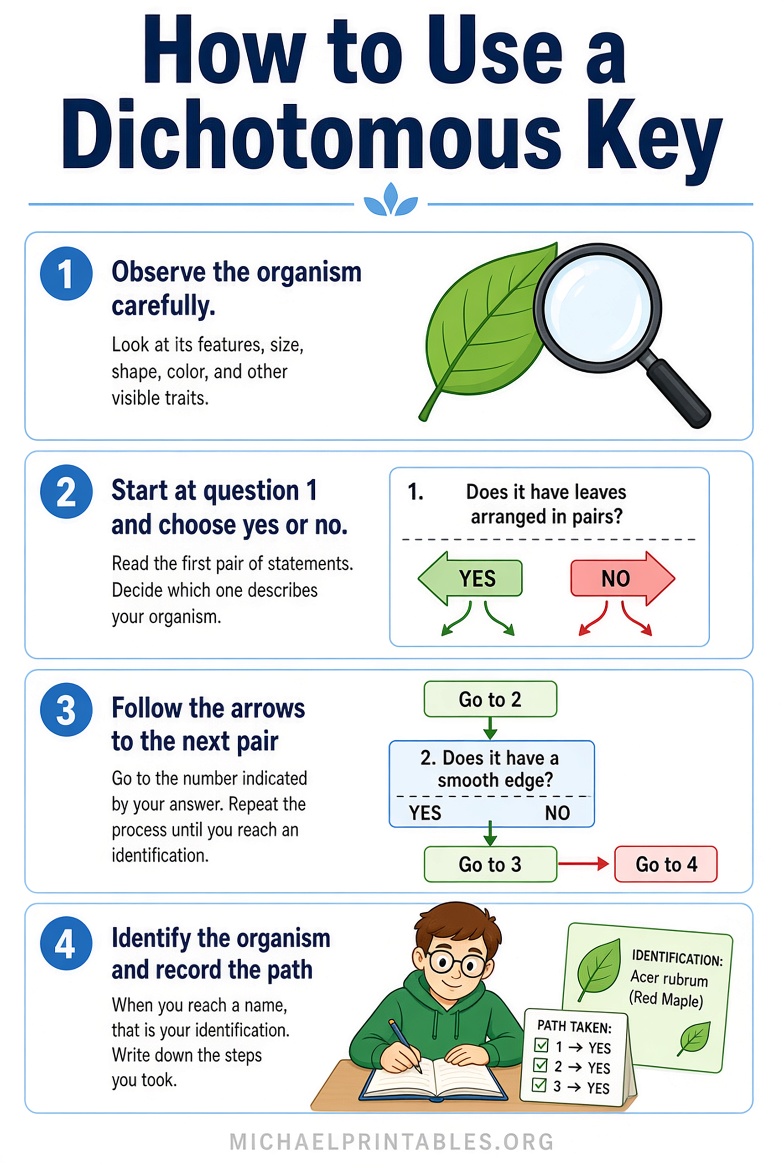
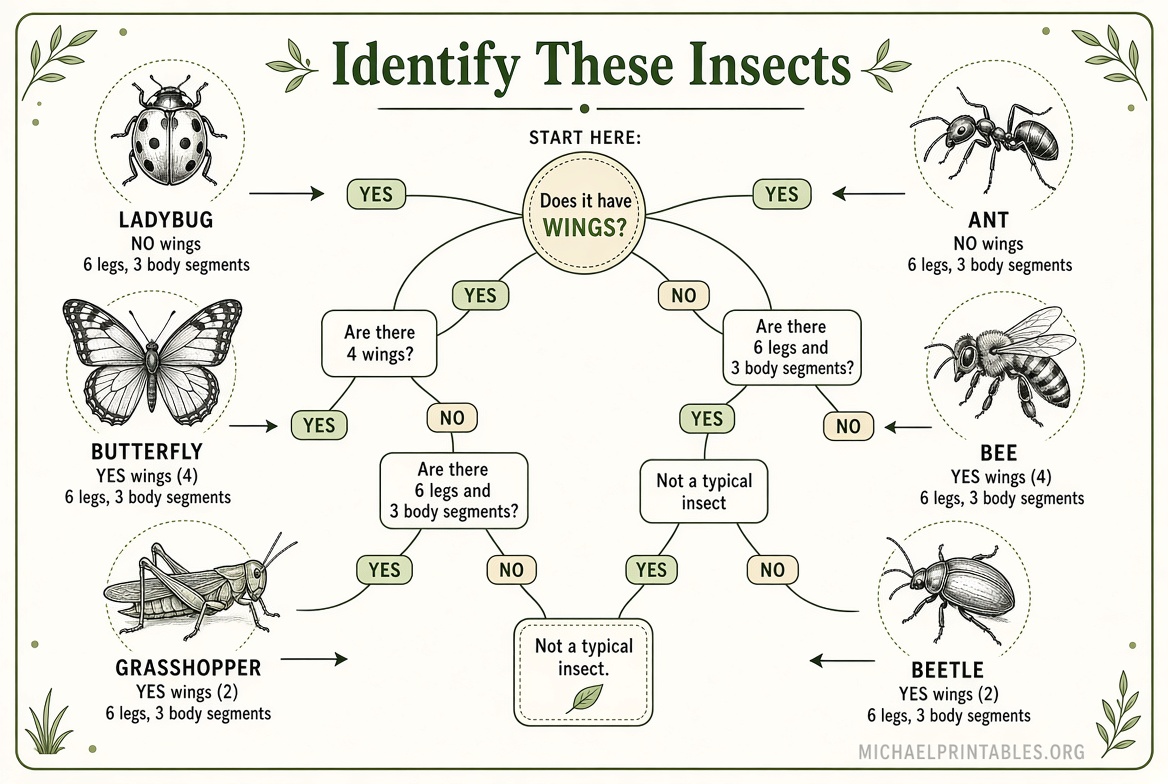
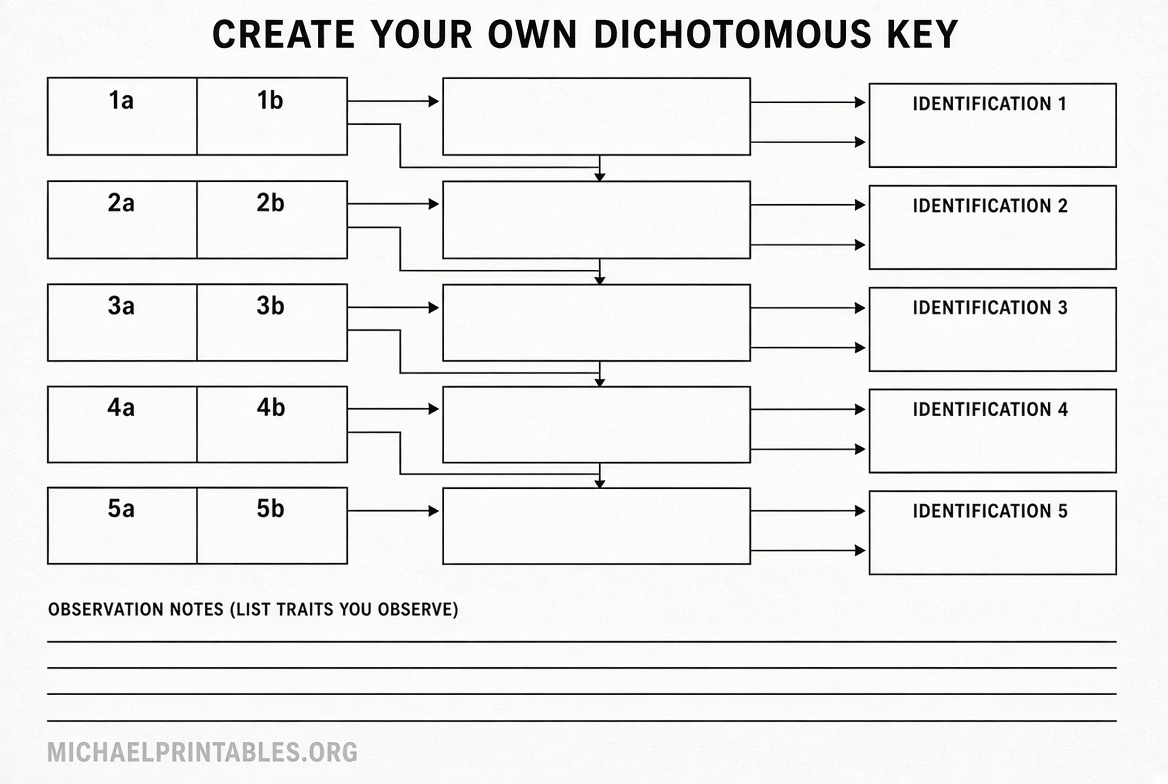
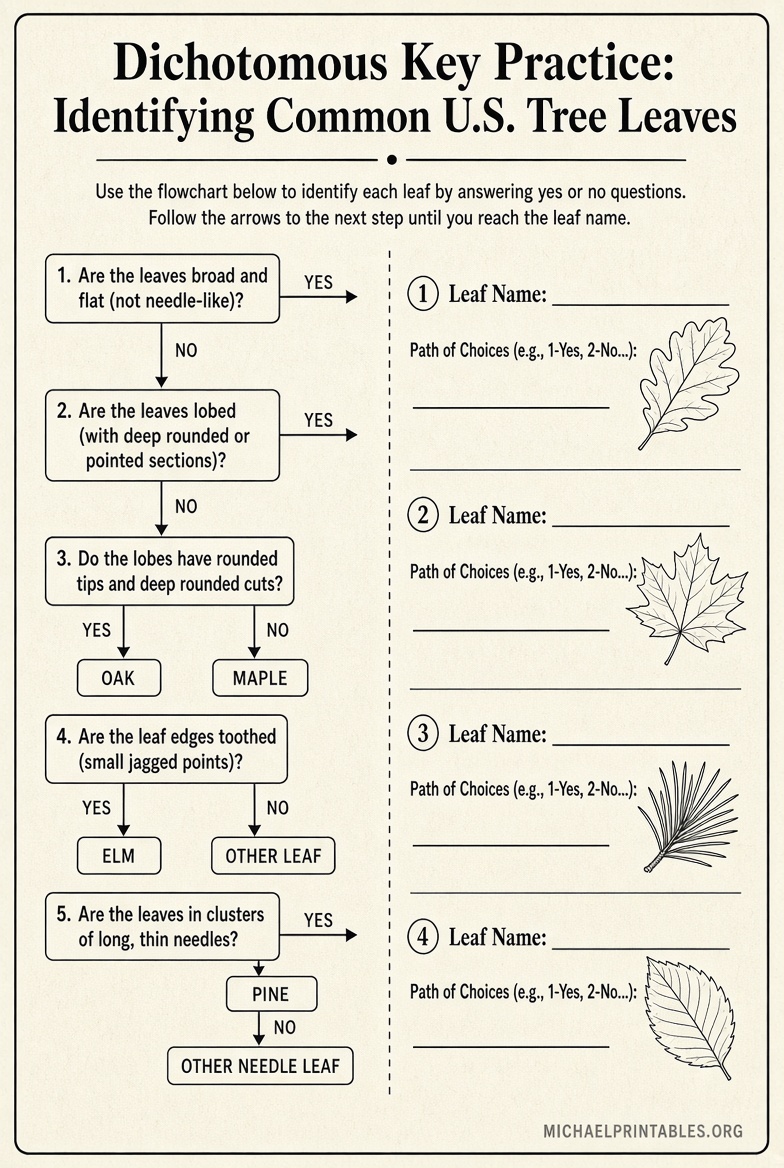
How to Use a Free Printable Dichotomous Key Worksheet?
Print the worksheet and review the key structure with students. Start every identification at step 1. Read both options carefully, choose the one that matches the organism, and follow the “go to” instruction. Continue until you reach a name. Record the path of choices for accountability.
Tips for success:
- Use clear, observable traits rather than vague ones.
- Practice with familiar items first (candy, toys, or classroom objects) before real organisms.
- Have students test their own keys with a partner.
- Compare results and discuss why certain traits work better than others.
These activities align well with U.S. middle school life science lessons on classification.
Where to Find Legitimate Free Printable Dichotomous Key Worksheets?
Several established educator platforms offer free downloads. Always check that the resource is labeled free and review any terms of use.
Teachers Pay Teachers hosts many free dichotomous key worksheets created by classroom teachers. One popular option is the free Dichotomous Key Dinosaurs Worksheet by Jadyn Thone. Students classify five dinosaurs using both text-based and visual keys, with differentiated versions and answer keys included. It works well for grades 7–9. Access it here: Free Dichotomous Key Dinosaurs Worksheet.
Another free choice is the candy dichotomous key activity from Wonder at the World. Students identify candy flavors from wrapper features and can create their own keys. U.S. and UK versions are included, suitable for grades 5–7. Find it at: Free Candy Dichotomous Key Worksheet.
The Amoeba Sisters provide a free Dichotomous Keys video recap handout that pairs with their popular YouTube video. Students practice identifying mystery organisms and discuss scientific names. Download the free PDF from their official site: Amoeba Sisters Free Dichotomous Keys Handout.
Kuraplan offers a free Dichotomous Key Template PDF. It includes a structured layout with decision boxes, yes/no branches, and space for observations so students can build their own keys. Download it directly: Free Dichotomous Key Template.
Wayground (formerly Quizizz) lists dozens of free dichotomous key worksheets and printables for various grades. These include practice problems with answer keys focused on plants, animals, and classification skills. Browse the collection here: Free Dichotomous Key Worksheets on Wayground.
Most of these require only a free account for download and are intended for classroom or personal educational use.
Tips for Choosing and Using Worksheets
Select worksheets that match your students’ grade level and the specific organisms you want to study. Look for clear illustrations, answer keys, and opportunities for both using and creating keys. Combine a printable worksheet with real specimens or photos for stronger engagement.
Many free resources include both numbered couplets and branching diagrams. Teaching both formats helps students understand that the same logic can appear in different layouts.
FAQ
Are these dichotomous key worksheets really free?
Yes. The resources linked above are offered at no cost by their creators or platforms. Some sites require a free account to download.
What grade levels are these best for?
Most free worksheets target grades 5–10, with strong options for middle school classification units. Adjust complexity by choosing simpler or more detailed keys.
Can students create their own dichotomous key?
Yes. Several of the free worksheets include templates or prompts for students to build a key from a set of organisms or objects.
Do I need answer keys?
Many of the free downloads include answer keys or clear pathways so teachers can check work efficiently.