100 Foods Before 1 Printable Free PDF | USA Guide – Looking for a 100 foods before 1 printable free PDF? This page explains what the checklist is, why parents in the United States use it, and where to download legitimate free versions you can print at home.
A “100 foods before 1” list is a tracking tool, not a medical rule. The goal is simple: offer your baby a wide mix of flavors and textures before their first birthday. A printable checklist makes that easier to see on the fridge.
What “100 Foods Before 1” Means?
“100 foods before 1” (also called a first 100 foods list) is a parent-friendly challenge. You introduce about 100 different foods between starting solids and age 1.
The number is a target, not a score. One food counts once. Mashed banana and banana spears are still banana. Repeat foods often. Babies usually need many tastes before they accept a new flavor.
Registered dietitian Katie Ferraro popularized a structured 100 First Foods approach for baby-led weaning. Many U.S. brands and feeding tools now publish similar checklists. The lists differ, but the idea is the same: more variety, less “same five foods every week.”
Why Parents Use a 100 Foods Checklist?
A printed tracker helps you:
- See gaps across food groups, not just fruit pouches
- Plan grocery trips around new foods
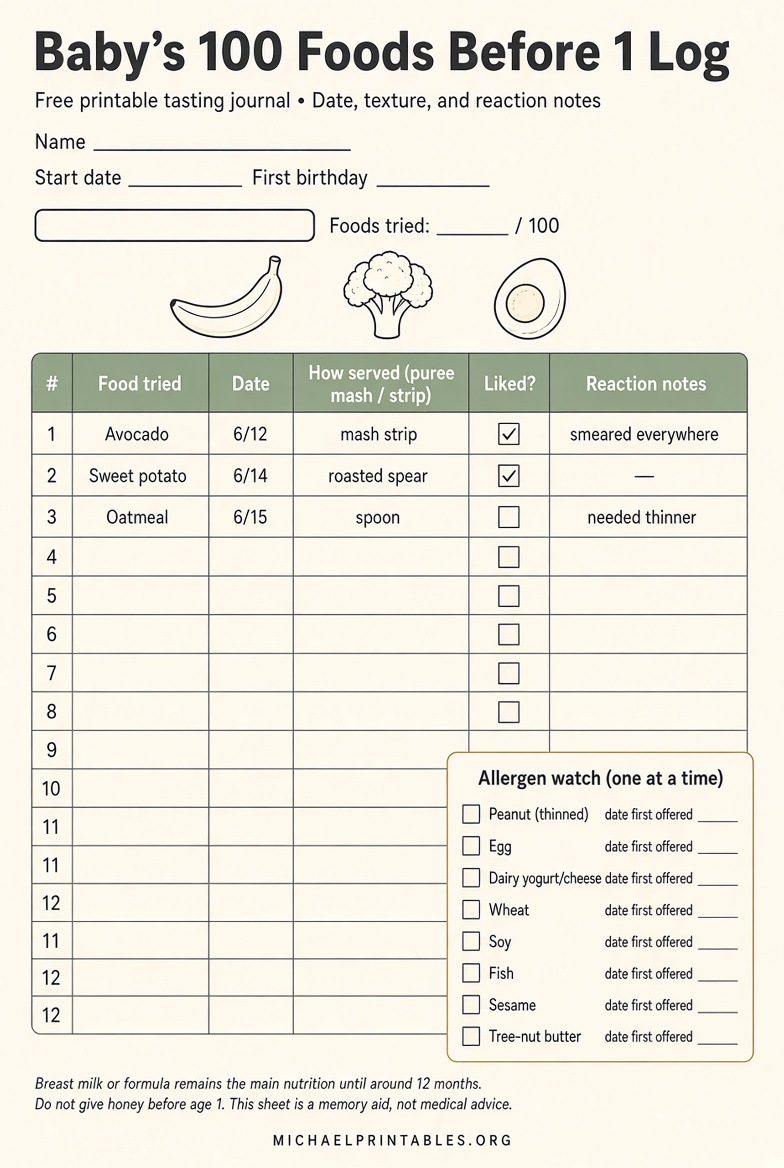
- Note first tastes, textures, and reactions
- Share a simple record with your pediatrician
- Keep solids interesting from about 6 to 12 months
Variety also supports nutrition. Around 6 months, babies need extra iron and zinc from complementary foods such as meats, beans, and iron-fortified infant cereal, while breast milk or infant formula stays the main drink until 12 months.
Early, age-appropriate exposure to common allergens may also lower allergy risk for many babies. That is a conversation to have with your child’s doctor, especially if your baby has severe eczema or a known food allergy.
When to Start Solids in the United States?
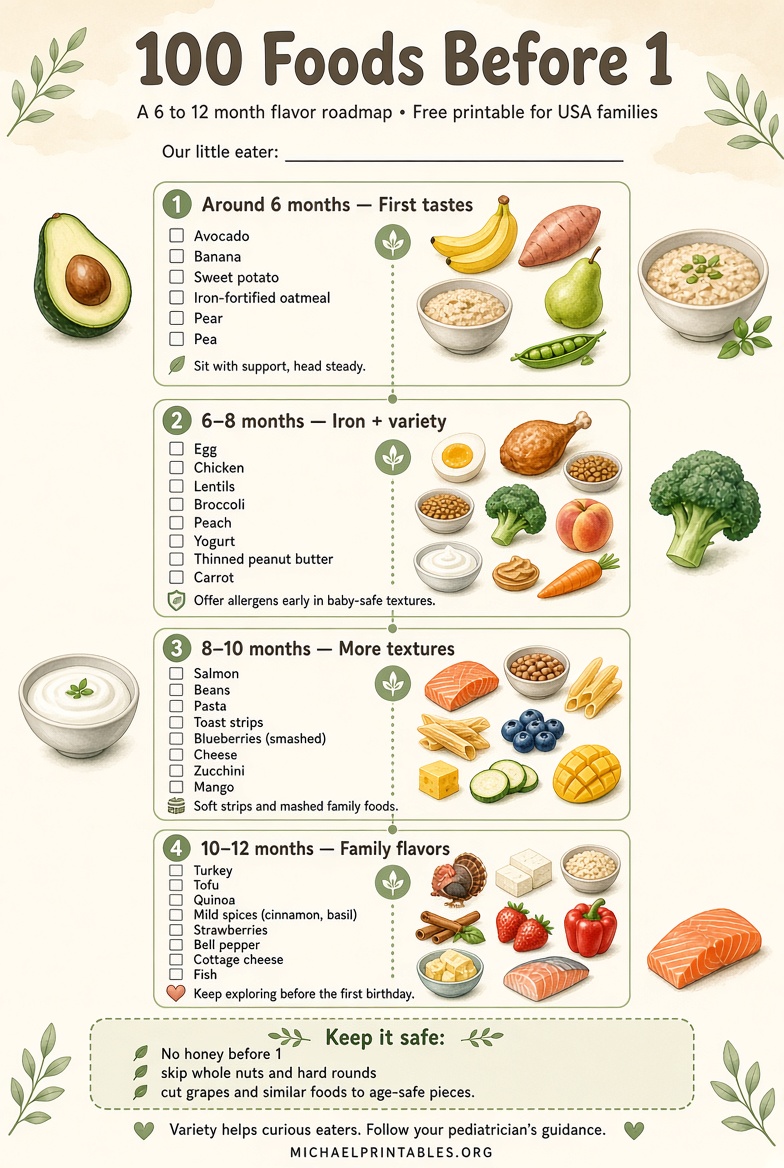
The CDC and American Academy of Pediatrics recommend starting foods other than breast milk or infant formula at about 6 months, when your baby is developmentally ready. Starting before 4 months is not recommended.
Look for these readiness signs:
- Sits up alone or with support
- Steady head and neck control
- Opens the mouth when food is offered
- Moves food back to swallow instead of pushing it out
- Brings objects to the mouth and shows interest in your food
You do not need a strict food order. By 7 to 8 months, many babies can eat foods from several groups: vegetables, fruits, proteins, unsweetened dairy foods such as yogurt and cheese, and whole grains.
Official starting-solids guidance is available from the CDC infant nutrition page and the AAP parent site HealthyChildren.org.
100 Foods Before 1 Printable Free PDF | USA Guide
Where to Get a 100 Foods Before 1 Printable Free PDF?
Use a current source with a real download or print button. Avoid random “free PDF” blogs that ask for payment, hide malware, or copy a copyrighted list without permission.
These options were checked as free resources for U.S. parents:
1. Once Upon a Farm 100 foods checklist (direct PDF)
Once Upon a Farm published a 100 Foods Before 1 checklist created with dietitian Kacie Barnes. The PDF is a free, instant download. No email signup is required.
Download the 100 Foods Checklist PDF
Print it in landscape and full color if you want the designed fridge version. Treat the list as a guide. Cut foods to a safe size and texture for your baby’s age.
2. Nombear first 100 foods chart (U.S. Letter PDF)
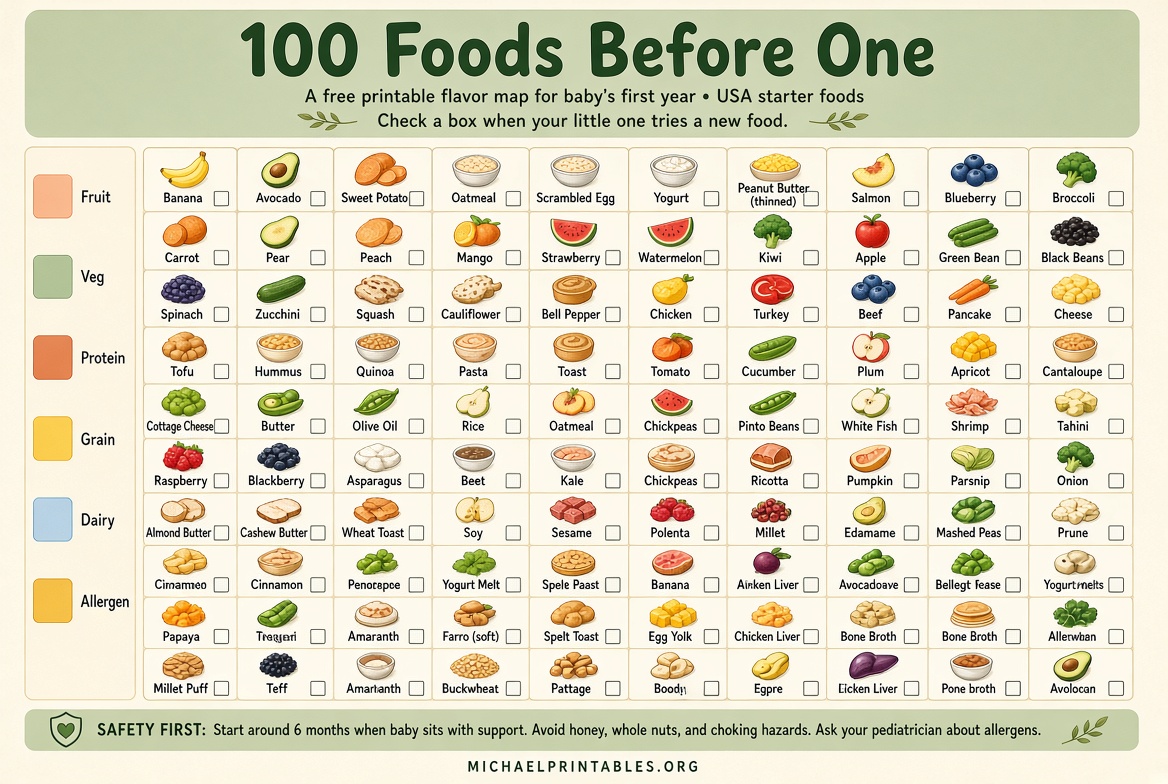
Nombear offers a free baby feeding chart with 100 first foods, allergen markings, and checkboxes. It is formatted for U.S. Letter paper. You can personalize it with your baby’s name or download a general color or black-and-white PDF with no email required.
Get the free 100 first foods chart
This is a practical option if you want a one-page tracker that prints cleanly at home or at a U.S. library, office, or pharmacy print counter.
3. BabyFoodTracker printable checklist (no account needed)
BabyFoodTracker has a free 100 foods before 1 checklist you can check off in the browser and print as a fridge version. Foods are grouped into grains, vegetables, fruits, proteins, dairy, and flavors. Progress can stay on your device.
Open the free printable 100 foods checklist
This works well if you want both a paper list and a simple digital log.
What to skip: paid Etsy copies sold as “official,” sites that only promise a PDF after a credit-card trial, and files that claim to be government forms. The CDC and AAP publish feeding guidance, not a branded 100-foods PDF.
How to Use the Printable?
- Print one copy for the fridge and keep a spare in your feeding binder or phone files.
- Start with foods your baby can handle: soft, mashable, or finely chopped.
- Offer one new single-ingredient food at a time when you are watching for a reaction. Many pediatricians still suggest waiting a few days between brand-new foods.
- Check a food off after a true taste, even if your baby spit it out.
- Offer rejected foods again later. Acceptance often takes 8 to 15 tries.
- Note dates, textures, and any rash, vomiting, diarrhea, or breathing symptoms.
- Bring the sheet to well-child visits if you have questions.
One meal can cover several foods. Example: soft scrambled egg, mashed avocado, and oat cereal is three foods, not one “breakfast.”
Sample Foods U.S. Parents Often Include
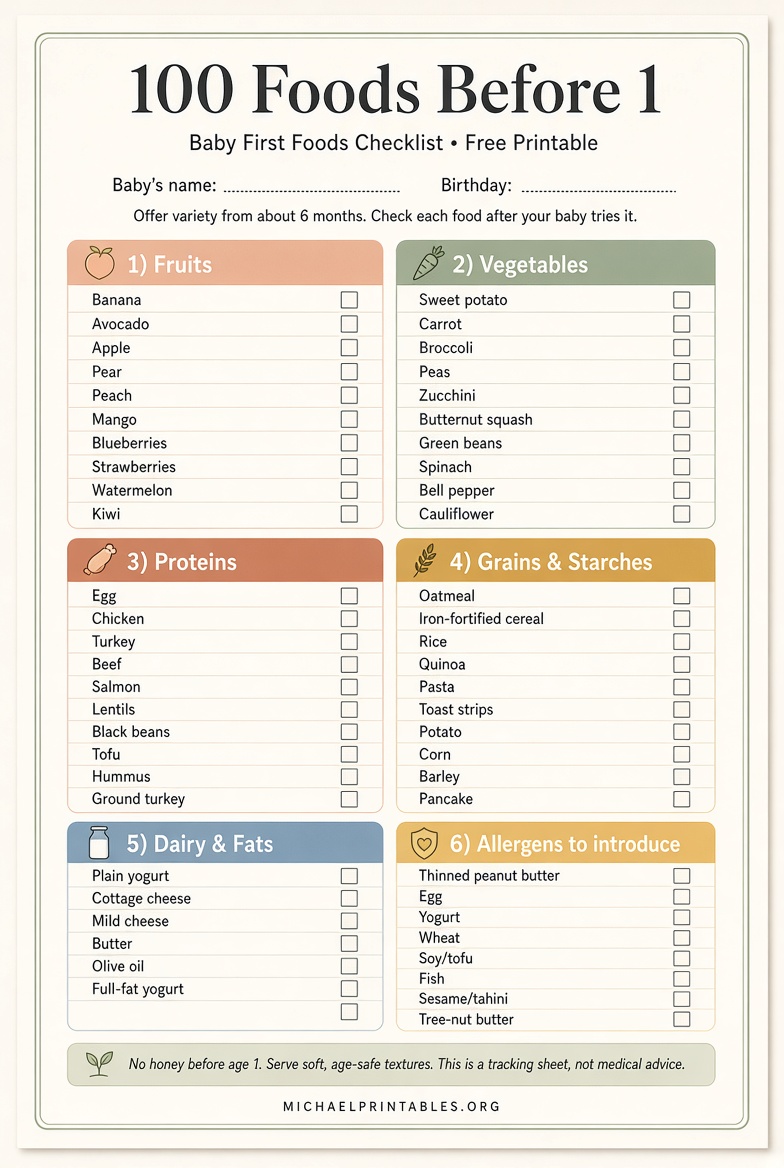
Lists vary. Use what your family eats and what your pediatrician says is appropriate. Common categories include:
- Fruits: banana, avocado, apple, pear, peach, mango, blueberries (smashed), watermelon, kiwi, plum
- Vegetables: sweet potato, carrot, broccoli, peas, zucchini, butternut squash, green beans, spinach, cauliflower, bell pepper
- Proteins: egg, shredded chicken, ground turkey or beef, salmon, lentils, black beans, tofu, hummus, smooth peanut butter thinned into puree or yogurt
- Grains and starches: iron-fortified infant oatmeal, barley cereal, toast strips, pasta, rice, quinoa, potato, polenta
- Dairy and fats: plain whole-milk yogurt, cottage cheese, shredded cheese, olive oil on cooked vegetables
- Count herbs and mild spices if your list includes them. Do not count honey, juice, soda, or candy.
Safety Rules Before You Print and Start
A checklist does not replace safe prep.
- No honey before age 1, cooked or raw, because of infant botulism risk.
- No cow’s milk as a drink before 12 months. Plain yogurt and cheese are often fine earlier.
- Avoid juice in the first year.
- Never give whole nuts, whole grapes, hot dogs, popcorn, hard raw vegetables, sticky globs of nut butter, or large chunks of meat or cheese.
- Thin nut butters. Smash round fruits. Cook firm foods until soft.
- Stay with your baby while they eat. Do not offer food in a moving car seat or while they are lying down.
- If your baby has severe eczema or an existing food allergy, ask your pediatrician before introducing peanut and other major allergens.
If you see hives, swelling, vomiting, or trouble breathing after a food, seek emergency care and call your child’s doctor.
Making 100 Foods Realistic
You have about six months after solids begin. That is roughly four new foods a week if you want to reach 100. Many families get there without tracking every day.
Helpful shortcuts:
- Serve a modified version of the family meal
- Rotate produce already in your kitchen
- Use frozen vegetables and canned beans with no added salt
- Shop store brands at major U.S. grocers
- If you use WIC, ask your clinic about approved infant cereals, fruits, vegetables, and proteins
If 100 feels stressful, aim for variety across food groups instead. A baby who tries 40 to 60 foods with many repeats is still building a strong foundation.
FAQ
Is there one official 100 foods before 1 printable free PDF?
No. There is no single government form. Use a reputable free checklist, then follow CDC and AAP feeding advice.
Do I have to finish all 100 foods before the first birthday?
No. The printable is a planning tool. Growth, safety, and a positive mealtime matter more than the number.
Can I use the list for baby-led weaning and spoon-feeding?
Yes. Check off the food, then serve it as a puree, mash, or soft finger food based on your baby’s skills.
Are store pouches allowed on the list?
You can count the main ingredient. Whole fruits, vegetables, and proteins still give more texture practice than pouches alone.
Should I avoid allergens until after age 1?
Current U.S. guidance does not support delaying common allergens for most babies once solids have started. Ask your pediatrician about the best plan for your child.
Bottom Line
A 100 foods before 1 printable free PDF is a simple way to track variety during the first year of eating. Download a legitimate checklist, print it, and use it beside official guidance from your pediatrician, the CDC, and the AAP.
Start when your baby is ready, keep textures safe, skip honey, and treat 100 as a helpful goal—not a race.