Free Printable Gluten Free Food List Guide – A printable gluten free food list is one of the most useful tools for anyone starting or maintaining a gluten-free diet in the USA. Whether you have celiac disease, non-celiac gluten sensitivity, or simply choose to avoid gluten, a clear, ready-to-print list helps you shop with confidence and avoid common pitfalls.
This resource page explains what a gluten-free diet involves, lists the main safe food categories, and points you to legitimate free printables and official guides from trusted U.S. sources.
What Is a Gluten-Free Diet?
Gluten is a protein found in wheat, barley, rye, and their derivatives. People with celiac disease must eliminate it completely because even small amounts can damage the small intestine. Others avoid it for sensitivity or personal preference.
The U.S. Food and Drug Administration (FDA) defines “gluten-free” labeling for packaged foods. Products labeled gluten-free must contain less than 20 parts per million (ppm) of gluten. This standard applies to most FDA-regulated foods and gives consumers a reliable benchmark.
Naturally gluten-free whole foods form the foundation of a healthy gluten-free diet. Processed gluten-free products exist, but focusing on fresh, unprocessed items is usually more nutritious and cost-effective.
Free Printable Gluten Free Food List Guide
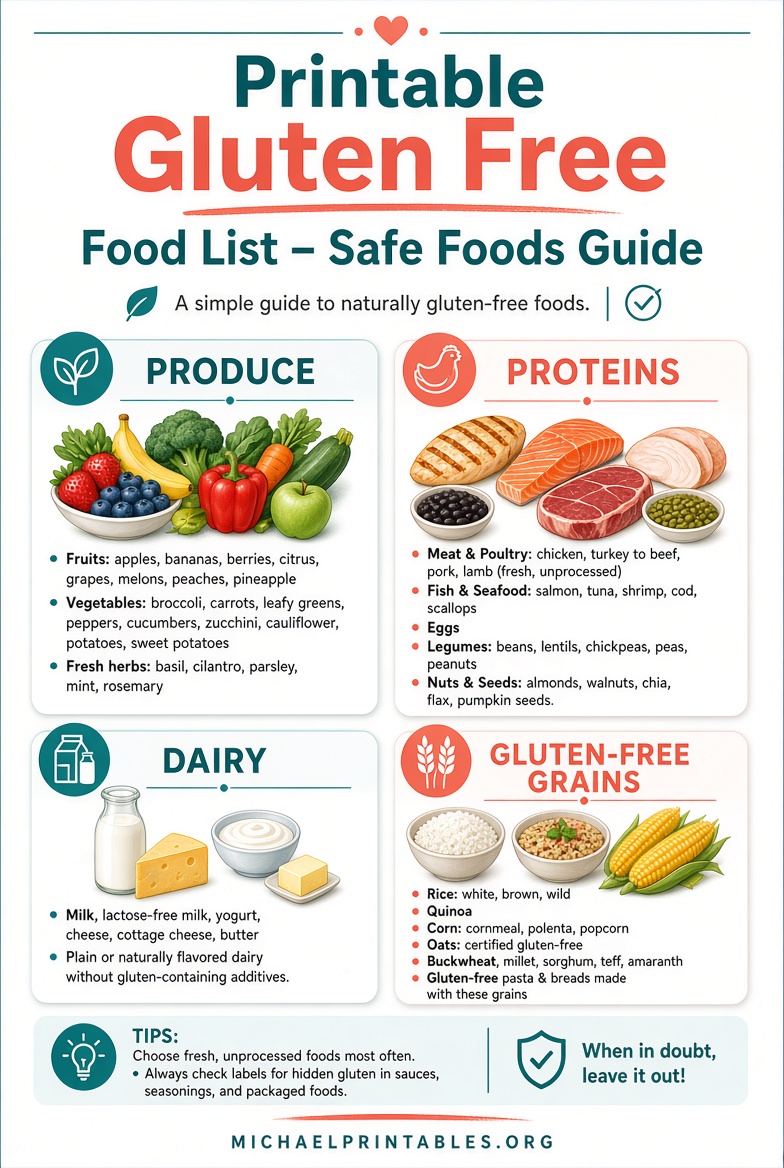
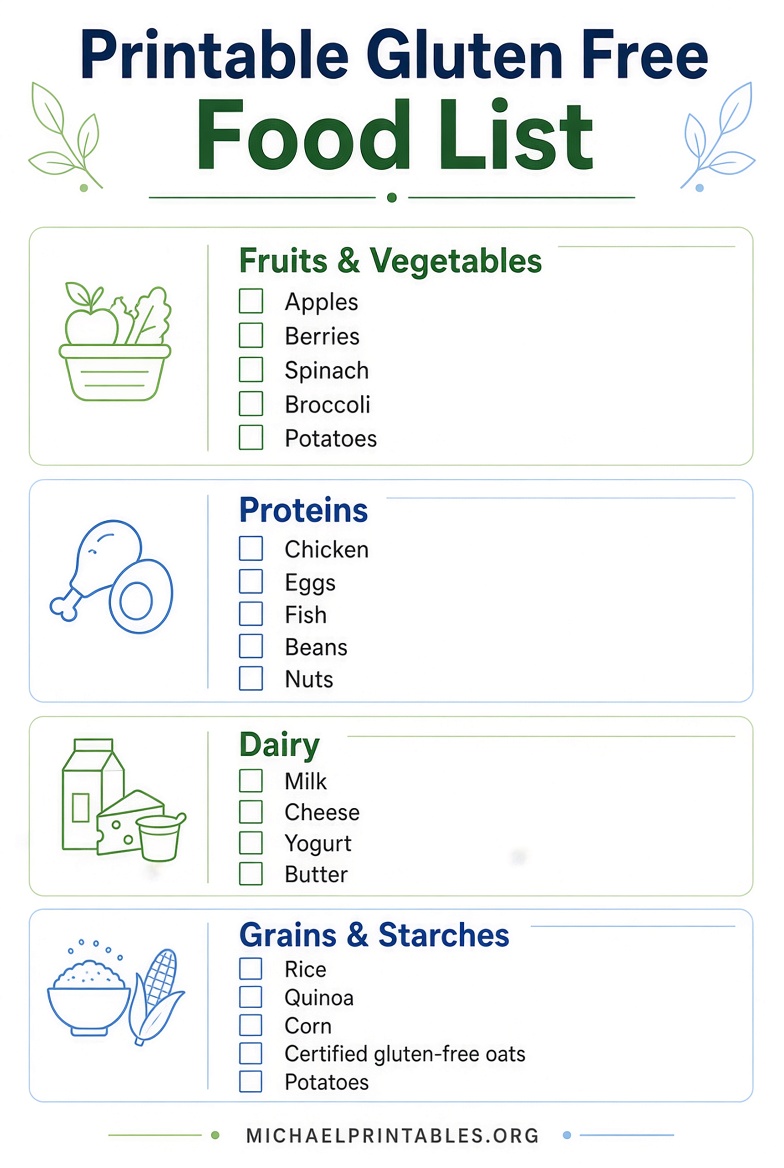
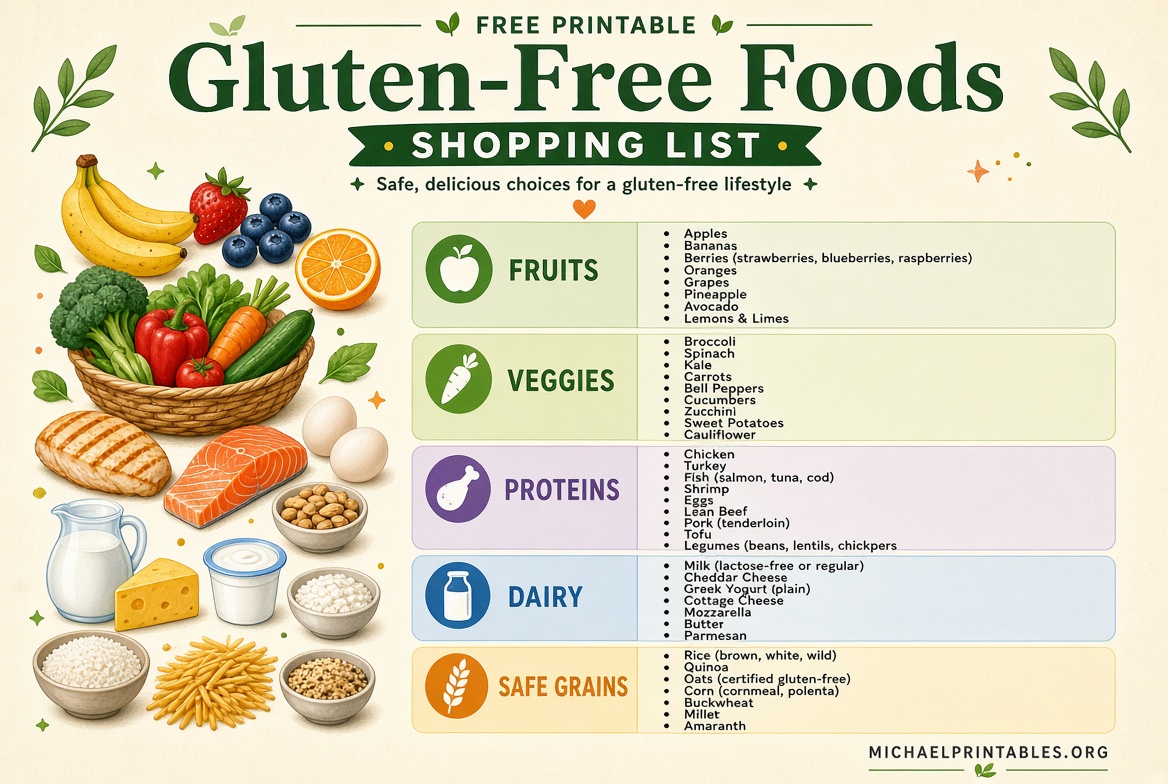
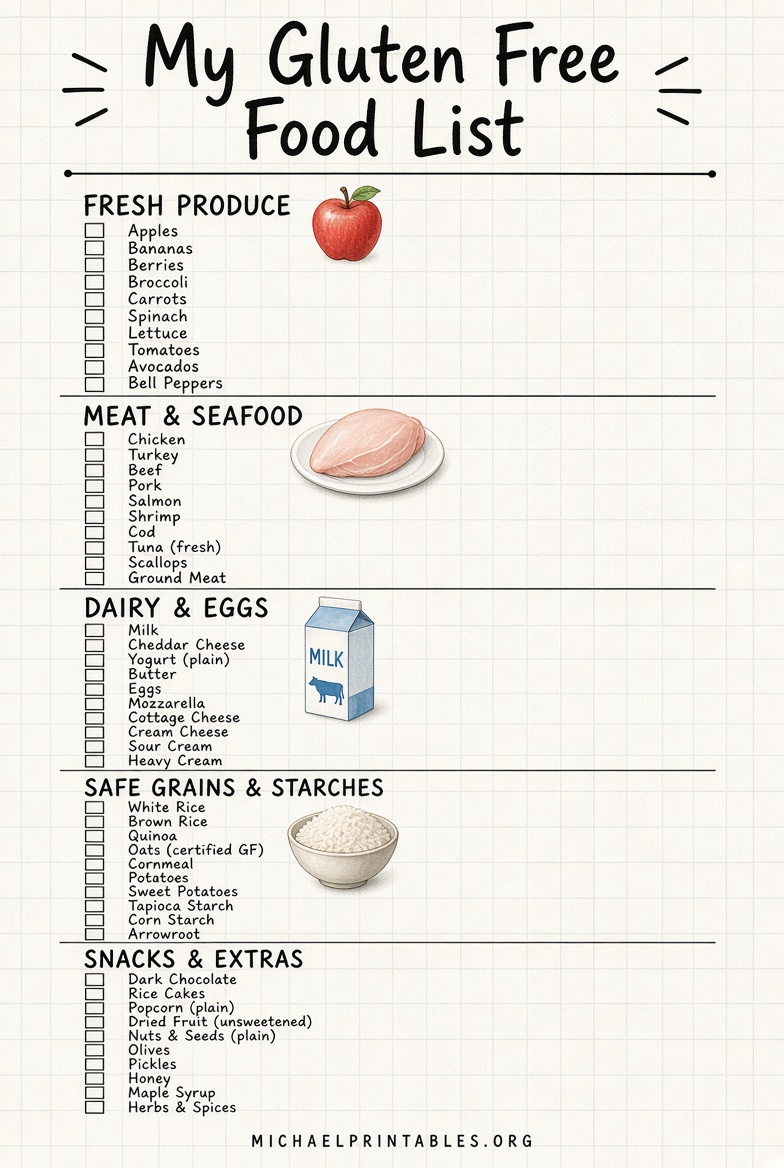
Naturally Gluten-Free Foods You Can Eat
Most fresh foods are safe. Here are the main categories:
Fruits and vegetables
All fresh fruits and vegetables are gluten-free. Watch canned, frozen, or prepared versions for added sauces or thickeners that may contain gluten.
Proteins
Plain meat, poultry, fish, seafood, eggs, beans, lentils, nuts, and seeds (unseasoned) are fine. Avoid breaded, marinated, or processed versions unless labeled gluten-free.
Dairy
Milk, plain yogurt, most cheeses, butter, and cream are naturally gluten-free. Check flavored or processed products.
Grains and starches
Safe options include rice, quinoa, corn, millet, buckwheat, amaranth, sorghum, teff, tapioca, potato, and certified gluten-free oats. These should generally be labeled gluten-free when processed into flours or packaged products to avoid cross-contact.
Fats, oils, and seasonings
Most pure oils, vinegar (except malt vinegar), herbs, and spices are safe. Read labels on blends and sauces.
Always read ingredient lists on packaged foods. Look for the six key words that often signal gluten: wheat, rye, barley, malt, brewer’s yeast, and oats (unless labeled gluten-free).
Where to Get Free Printable Gluten Free Food Lists?
Several reputable sources offer free downloadable lists or guides you can print and take to the store:
- Taste of Home provides a clear, categorized free printable PDF of naturally gluten-free foods. Download it directly from their page: Taste of Home Gluten-Free Foods Printable.
- The Celiac Disease Foundation offers an up-to-date Food Labeling Guide PDF that includes lists of naturally gluten-free foods and labeling rules: Celiac Disease Foundation Food Labeling Guide.
- Free Printable Grocery Lists hosts a simple gluten-free grocery list available in PDF format for easy printing: Free Printable Gluten-Free Grocery List.
- The Gluten Intolerance Group (GIG) offers practical printable bulletins, including easy-to-find snacks and meals: GIG Easy-to-Find Meals and Snacks (look for the “Download a Printable Version” link on the page).
- For official labeling rules, refer to the FDA’s gluten and food labeling page: FDA Gluten and Food Labeling.
These sources are free, current, and come from established organizations or publications. Avoid sites that require payment or make unverified claims.
Practical Tips for Using Your Printable List
Print the list and keep a copy in your kitchen and another in your purse or car. Use it while meal planning and grocery shopping.
Shop the perimeter of the store first—produce, meat, dairy, and eggs are usually safest. When choosing packaged items, prefer those with a “gluten-free” claim or third-party certification such as GFCO.
Be aware of cross-contact at home. Use separate cutting boards, toasters, and utensils if others in the household eat gluten. Store gluten-free items above gluten-containing ones in the pantry.
For oats, always choose certified gluten-free varieties, as regular oats often have cross-contact during processing.
Brief FAQ
Is a gluten-free diet necessary for everyone?
No. It is essential for people with celiac disease or confirmed gluten sensitivity. For others, it is optional and should not replace a balanced diet without medical advice.
Can I eat oats on a gluten-free diet?
Only if they are specifically labeled gluten-free. Regular oats are frequently contaminated.
Are all “wheat-free” products gluten-free?
Not necessarily. Barley and rye also contain gluten, so look for the full “gluten-free” claim.
Where can I find more support in the USA?
Organizations such as the Celiac Disease Foundation (celiac.org), National Celiac Association (nationalceliac.org), and Gluten Intolerance Group (gluten.org) offer reliable education, recipes, and local support resources.
A good printable gluten free food list removes guesswork and helps you build meals around whole, nutritious foods. Download one of the free resources above, keep it handy, and focus on the wide variety of safe options available at any U.S. grocery store. With practice, shopping and cooking gluten-free becomes straightforward and sustainable.