Free Printable Personal Space Worksheets for Kids – Personal space worksheets help children understand body boundaries, respect others’ comfort zones, and practice social skills in everyday situations. These free printable personal space worksheets are especially useful for preschool through elementary students, including those in special education or working on social-emotional learning (SEL) goals.
Whether you are a parent, teacher, or therapist in the United States, clear visual and written practice makes the abstract idea of personal space concrete and easier to remember.
What Are Personal Space Worksheets?
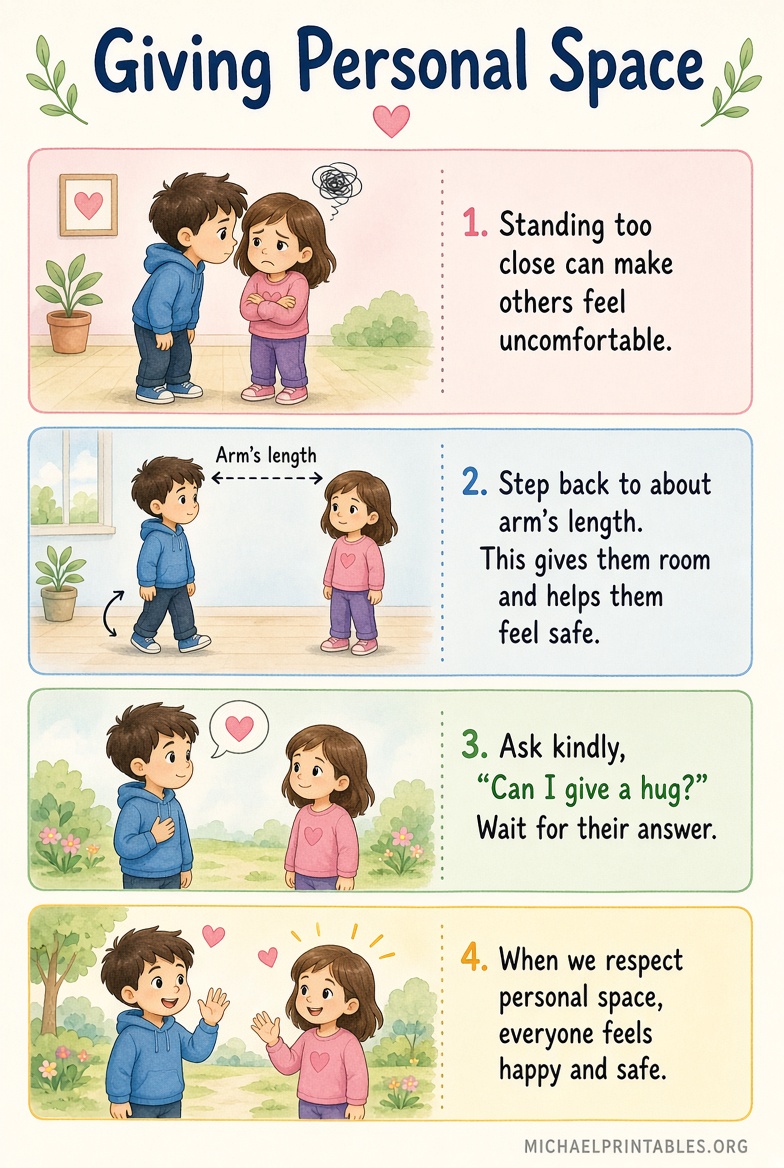
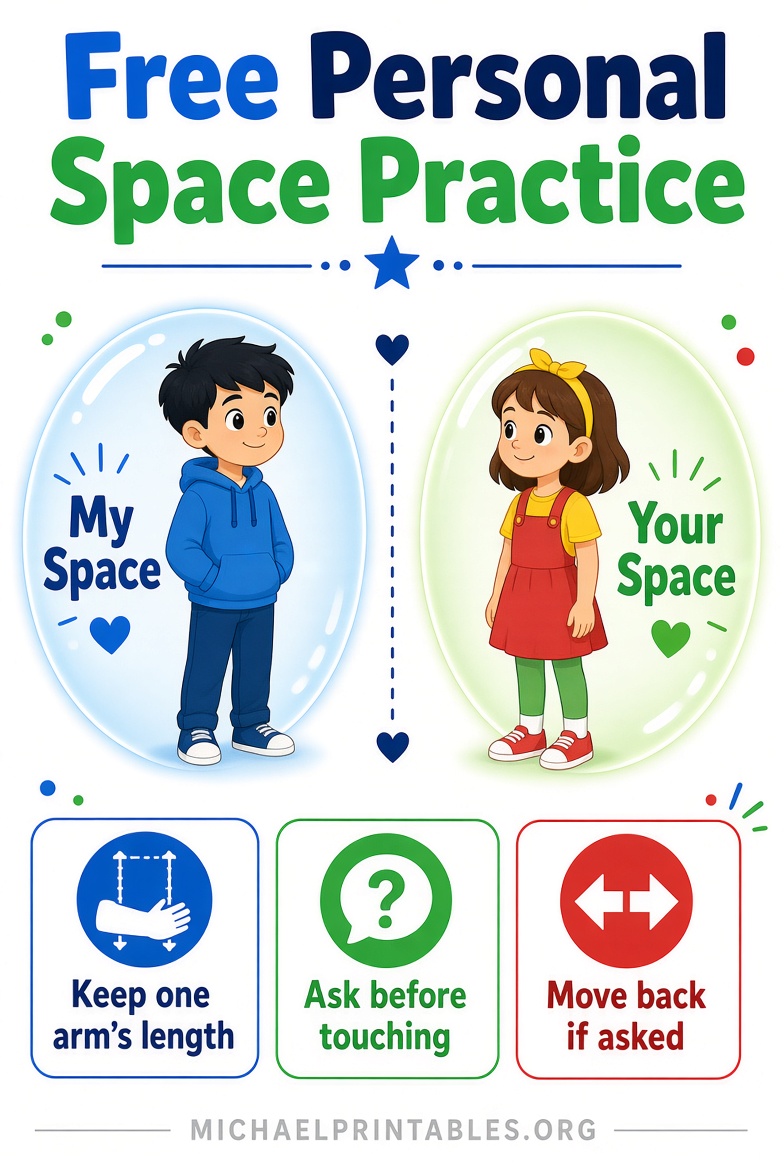
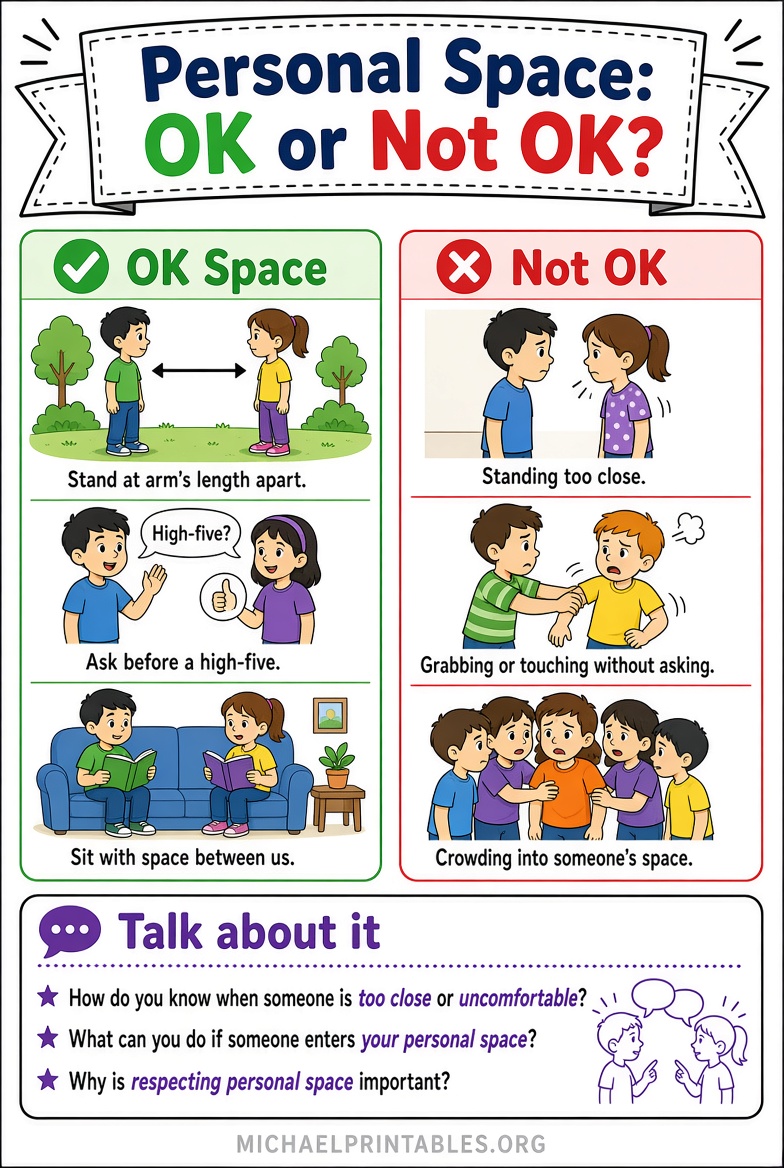
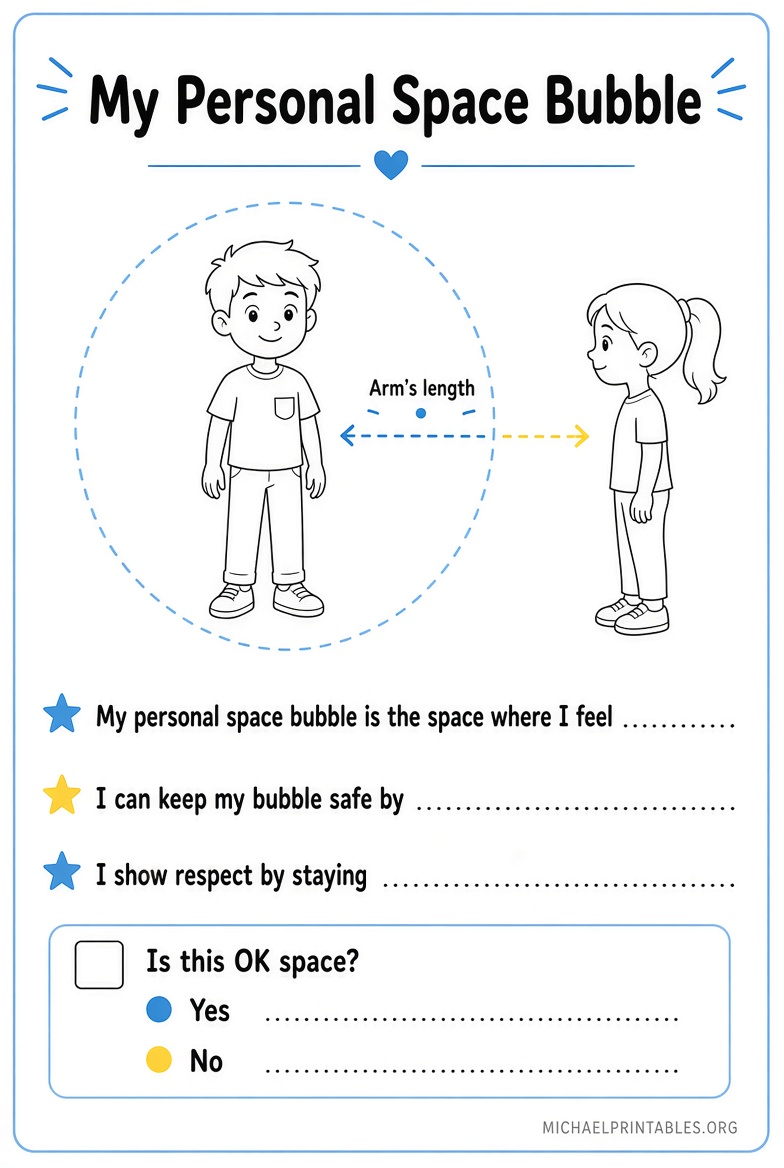
Personal space worksheets teach kids about the invisible “bubble” around each person. Activities often include sorting “OK” versus “not OK” behaviors, completing sentences about distance, matching scenarios, social stories, and reflection pages.
Common themes cover keeping hands and feet to yourself, asking before touching, standing about an arm’s length away in most social settings, and recognizing when someone needs more room. Many free printable personal space worksheets use simple language, icons, and cut-and-paste formats so they work for a wide range of ages and learning needs.
Why Teach Personal Space to Kids?
Understanding personal space supports safety, reduces conflicts on the playground or in line, and builds empathy. Children who learn these skills early often feel more confident navigating classrooms, family gatherings, and public places.
For students with autism, ADHD, or sensory differences, explicit instruction paired with visuals is especially helpful. Free printable personal space worksheets give consistent practice that can be repeated at home and school.
Free Printable Personal Space Worksheets for Kids
Best Free Printable Personal Space Worksheets
Here are trusted, currently available free resources. All links open in a new tab and lead to legitimate download pages or direct PDFs.
- A free social story printable that explains personal space in clear, child-friendly language with visuals. It covers why space matters, how to give room, what to do in busy places, and asking before touching. Download the PDF from Social Workers Toolbox: Personal Space Social Story PDF.
- Differentiated student pack worksheets with sentence completion, cut-and-paste, circling answers, and matching activities focused on the “just right” distance and responses when space is invaded. Access the free PDF: Learning for Life Personal Space Student Pack.
- A no-prep lesson plan with visuals and scenarios designed for Pre-K and Kindergarten. It includes guidance for introducing the personal space “bubble” and practicing in real classroom routines. Get the free downloadable activity from Everyday Speech: Free Keeping Personal Space Lesson Plan.
- A free special-education-friendly worksheet set that includes a short reading passage about personal space plus an “OK or Not OK” sorting page with visual icons. Available at no cost on Teachers Pay Teachers (free account required to download): Free Personal Space Worksheet.
- A simple partner-based personal space worksheet that asks students to explore comfort zones, discuss feelings when space is invaded, and practice different relationship distances. Direct PDF: Personal Space Worksheet PDF.
These resources focus on practical skills rather than theory and can be printed on standard letter-size paper.
How to Use These Worksheets at Home or School?
Start with a short discussion or social story so children understand the goal. Then complete one or two pages together. Role-play the scenarios afterward using hula hoops, carpet squares, or simply standing arm’s length apart.
Send a page home for family practice or use the worksheets during morning meetings, small-group counseling, or speech sessions. Revisit the same free printable personal space worksheets over several weeks so the language and habits stick.
Tips for Teaching Personal Space Effectively
Keep language concrete: “about one arm’s length” or “enough space so your hands are on your hips and not touching anyone.” Pair worksheets with real movement—lining up, walking in the hallway, or sitting on the rug.
Celebrate successful moments with specific praise. For children who need extra support, add visual reminders such as a small “bubble” picture on their desk or a personal space poster in the classroom.
Consistency between home and school helps most. Share the same free printable personal space worksheets with caregivers so everyone uses similar wording.
Frequently Asked Questions
Are these personal space worksheets truly free?
Yes. The links above lead to free downloads or free resources that require only a free account in some cases (such as Teachers Pay Teachers). No payment is required for the listed materials.
What age group works best with free printable personal space worksheets?
Most are designed for preschool through early elementary (ages 4–8), though several can be adapted for older students or used in special education settings with older learners.
Can I use these for autism or special education support?
Absolutely. Many of the free resources include visuals, simple language, and differentiated formats that support students with autism, developmental delays, or social skills goals.
How often should kids practice personal space skills?
Short, frequent practice works better than long one-time lessons. Aim for a few minutes several times a week, especially during transitions or group activities.
Free printable personal space worksheets give families and educators ready-to-use tools that make an important social skill clear and memorable. Download a few of the resources above, print what you need, and start practicing today.